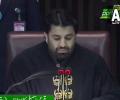
Refuting the news of the resignation of Pakistan's Deputy Speaker Qasim Suri, the National Assembly Secretariat on Sunday clarified that Suri did not resign from his office, reported local media adding that he will chair the crucial National Assembly on Monday for the election of the new Prime Minister of Pakistan.

After announcing resignation, he asked Ayaz Sadiq of PML-N to chair the proceedings, who is now conducting the proceedings.

With the National Assembly Deputy Speaker Qasim Suri rejecting the no-confidence motion moved by the Opposition, Pakistan Prime Minister Imran Khan on Sunday said that the conspiracy hatched by a foreign country to topple the Pakistan Tehreek-e-Insaf (PTI) government in the country has failed.
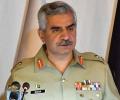
Military spokesman Major General Babar Iftikhar made the remarks while speaking to a private TV channel in the wake of rejection of a no-confidence motion and subsequent dissolution of the National Assembly (NA) by President Arif Alvi on advice of Prime Minister Imran Khan.

Pakistan's Chief Justice Umar Ata Bandial on Thursday noted that National Assembly deputy speaker Qasim Suri's move to dismiss a no-confidence motion against embattled Prime Minister Imran Khan through a controversial ruling is, prima facie, a violation of article 95 of the constitution as the apex court heard the high-profile case for the fourth day.

The apex court on Wednesday sought the minutes of the National Security Council meeting to know more about the alleged 'foreign conspiracy' as it delayed its verdict on whether Prime Minister Khan had violated the Constitution by dissolving Parliament rather than face a no-confidence vote.

As many as 174 members voted in favour of the motion in the 342-member House while members of the ruling Pakistan Tehreek-e-Insaf were absent during the voting.

Following is a brief chronology of major developments related to the formation of the Pakistan Tehreek-e-Insaf (PTI) party by cricketer-turned-politician Imran Khan and his abrupt move to dissolve Parliament.

Khan, 71, has been lodged at the Adiala Jail in Rawalpindi on account of multiple cases against him.

'Under the circumstances, this announcement may remain limited to bravado and little else, adding momentum to Imran's narrative of victimhood,' points out Rana Banerji, who headed the Pakistan desk at RA&W.
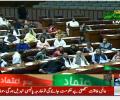
Pakistan's National Assembly session was on Thursday adjourned abruptly till Sunday after opposition lawmakers demanded an immediate vote on a no-confidence motion against embattled Prime Minister Imran Khan who has effectively lost majority in the lower house.

The review petition, filed through Dr Babar Awan and Azhar Siddique, named the Pakistan Peoples Party, Pakistan Muslim League-Nawaz, Supreme Court Bar Association, Sindh High Court Bar Association and the Sindh Bar Council as respondents.

The court ordered all parties to avoid taking any unconstitutional measures and adjourned the hearing until Monday.
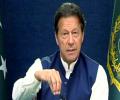
Pakistan's Opposition leaders have ridiculed Khan's allegation, and the US has dismissed it.

Imran Khan will continue to be the prime ninister of Pakistan until the appointment of a caretaker premier, according to a notification issued by President Arif Alvi on Monday.

Pakistan Muslim League-Nawaz president and Leader of Opposition in National Assembly Shehbaz Sharif, 70, who is the Opposition's candidate for the new prime minister, will announce his possible government priorities after taking the oath.

The SC has restored the National Assembly after it declared the government's decision to dissolve the assembly and NA Deputy Speaker Qasim Suri's ruling against the Constitution.

Citing sources within the Federal Investigation Authority (FIA), the Geo News reported that the names of the PTI leaders and its party chief have been added for their involvement in the May 9 violence and desecration of martyrs' monuments.

Prime Minister Khan, who had effectively lost his majority in the 342-member National Assembly, made a brief address to the nation after a stormy parliament session was adjourned by Deputy Speaker Qasim Suri.
A larger bench of the apex court -- comprising Chief Justice Umar Ata Bandial, Justice Ijazul Ahsan, Justice Mazhar Alam Khan Miankhel, Justice Munib Akhtar and Justice Jamal Khan Mandokhail -- took up the matter after Deputy Speaker Qasim Suri rejected the move to dislodge the prime minister by declaring the no-trust motion unmaintainable due to its link with a so-called foreign conspiracy.
The Opposition parties need 172 members in the 342-member house to orchestrate the downfall of Prime Minister Khan.

Pakistan's powerful Army has contradicted Prime Minister Imran Khan's remarks accusing America of hatching a conspiracy to topple his government, saying there was no evidence of interference in the country's internal matters, according to a media report.

A video shows that Shehbaz was asking an aide for help, however even after the aide's assistance, his headphones dropped once again.

There are reports that the government may try to physically prevent opposition members and nearly two dozen PTI dissidents from reaching the Parliament House through protestors.

Opposition lawmakers, who earlier appeared confident of the success of the no-trust move as they made their way to Parliament House, protested against the decision.

The Opposition parties need 172 members in the 342-member house to orchestrate the downfall of Prime Minister Khan.

'Five months after the elections in February 2024, the Pakistan army has not been able to break Imran Khan's resolve and break his political party.'

Shehbaz, the younger brother of former three-time prime minister Nawaz Sharif, received 174 votes -- two more than the simple majority of 172.
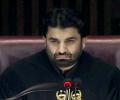
The apex court within hours took suo motu notice of it and a five-member bench started hearing the case on Monday.

Pakistan's National Assembly resumed its crucial session on Monday after a two-day recess where Opposition is likely to formally table the no-trust motion against embattled Prime Minister Imran Khan amidst fluid political situation in the country.

With the Sharif family set to return to power in Pakistan amid the fast-deteriorating economic situations and political instability, it is to be seen if Shehbaz Sharif infuses fresh energy into the system, or the much-tainted family continues to resort to its old ways.
